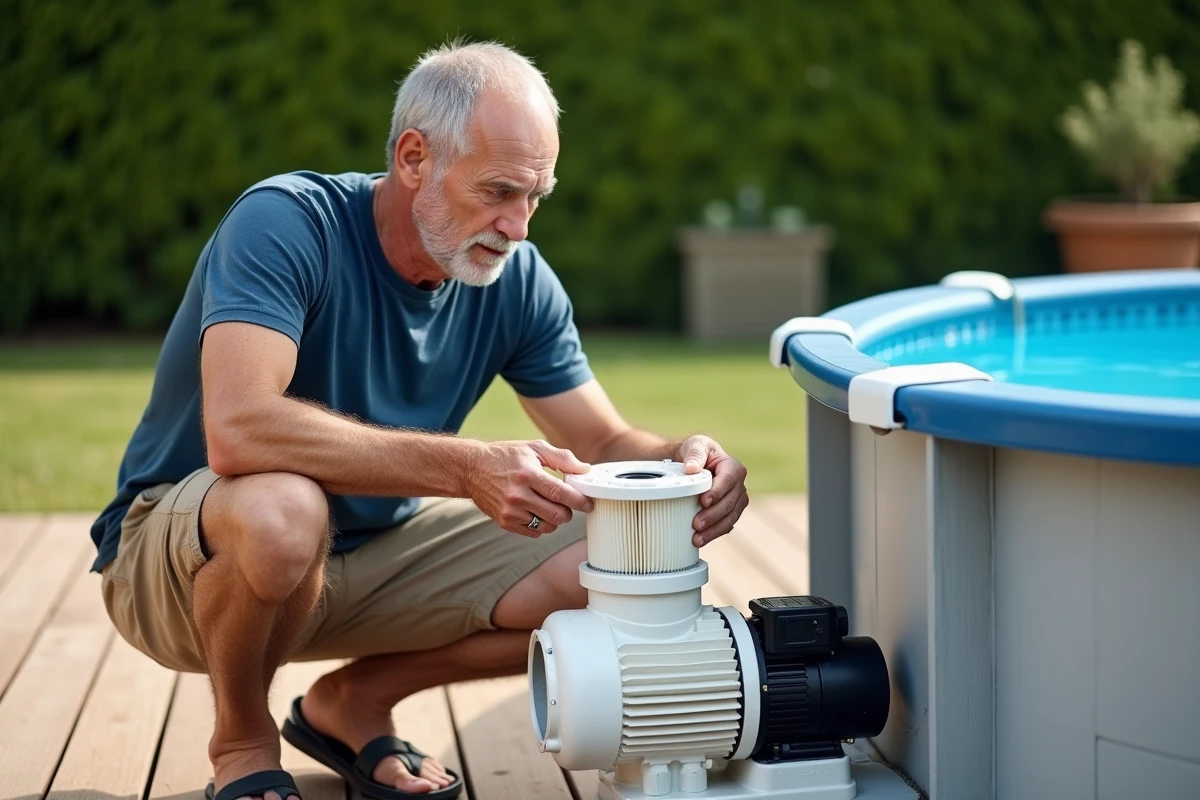
You have removed the filter cartridge from your pool to clean it, and the temptation is great to restart the pump in the meantime. After all, the water is circulating, the surface is moving, everything seems to be working. This situation, common among above-ground pool owners, deserves a clear distinction of what is actually happening in the hydraulic circuit when the filter is absent.
Circulation without a filter and actual filtration: two distinct mechanisms
When the pump runs without a cartridge, the water passes through the filter body without encountering any resistance. It circulates, yes, but it does not get cleaned. Fine particles, pollen, sunscreen residues, and microscopic algae flow through the circuit and go directly back into the pool.
Have you ever noticed that the water seems clear after stirring, even without a filter? It’s a surface effect. The movement of the water disperses impurities instead of concentrating them in a visible spot. They remain present, just better distributed.
To understand this nuance, Habitat Vision’s pool advice clearly details the difference between active flow and effective filtration.
Circulation without a filtering medium never replaces filtration. A cartridge filter retains suspended particles thanks to the fineness of its pleated fabric. Without this physical barrier, the pump is merely churning dirty water.
Pool pump without a cartridge: the concrete risks for the equipment
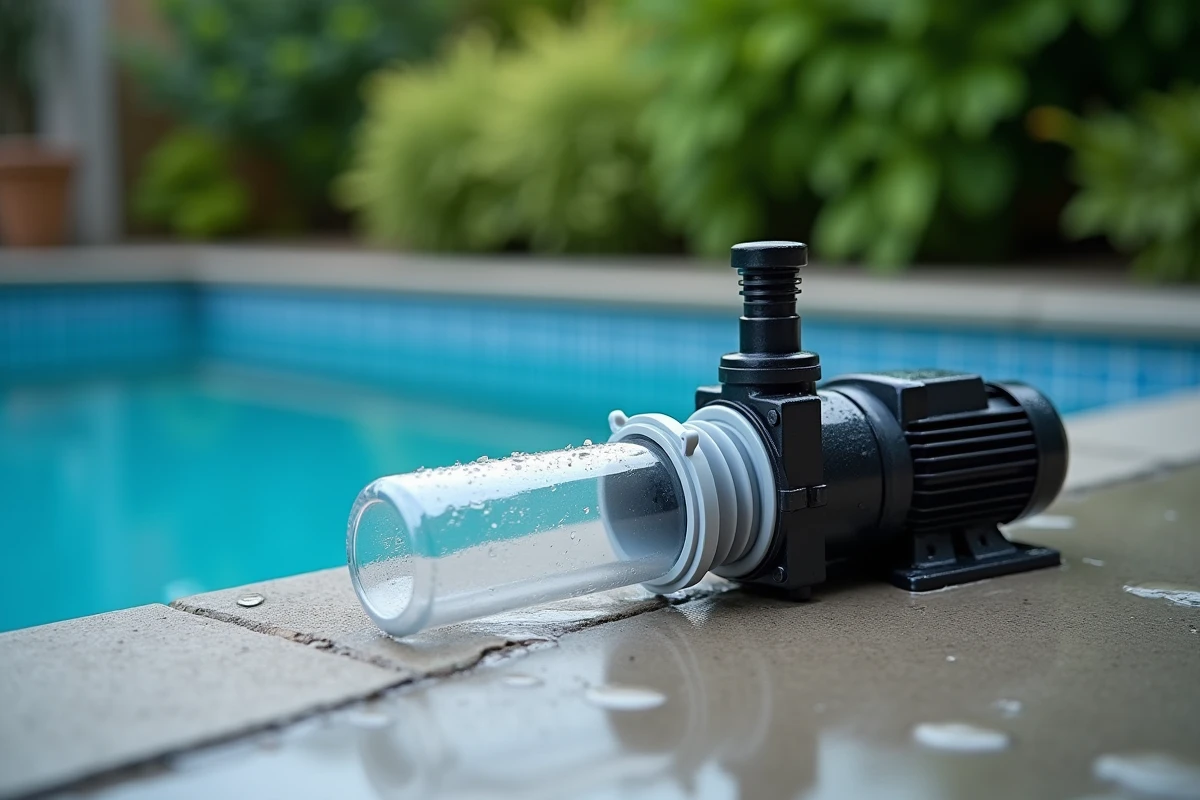
Running the pump without a cartridge poses more than just a water quality issue. The equipment itself undergoes abnormal stresses.
Without a filtering medium in the tank, the flow is no longer restricted. Water passes too quickly, internal pressure drops unusually, and the pump’s turbine operates under conditions for which it was not designed. Several manufacturers report that this situation can cause premature wear of the turbine and seals.
In pool owner groups, users also report that brands refuse warranty coverage when the tank has operated for an extended period without sand or a cartridge. The manufacturer’s reasoning is simple: the filtration system is designed as a whole. Removing one component alters the intended operating conditions.
In summary, even if the pump seems to be running normally, extended operation without a cartridge weakens the hydraulic circuit.
Small above-ground pool without a filter: how far can we go?
For small above-ground pools, the question arises differently. The water volume is low, the investment is minimal, and some owners wonder if they can manage with minimal filtration or even without a filter at all.
Some practices exist among owners of these small pools:
- Use the “circulation” position (bypass the filter) during a shock chlorination treatment to homogenize the product throughout the water volume, then replace the cartridge afterward to capture suspended particles.
- Supplement with a pool robot or a skimmer to remove visible debris, relying on chemical treatment for the rest.
- Alternate between short periods without a cartridge (backwashing, waiting for a replacement cartridge) and normal filtration cycles as soon as possible.
These approaches work for very short durations. Beyond a few hours without filtration, even a small pool sees its water quality degrade rapidly, especially in warm weather. The reduced volume accelerates the proliferation of algae and bacteria, not the other way around.
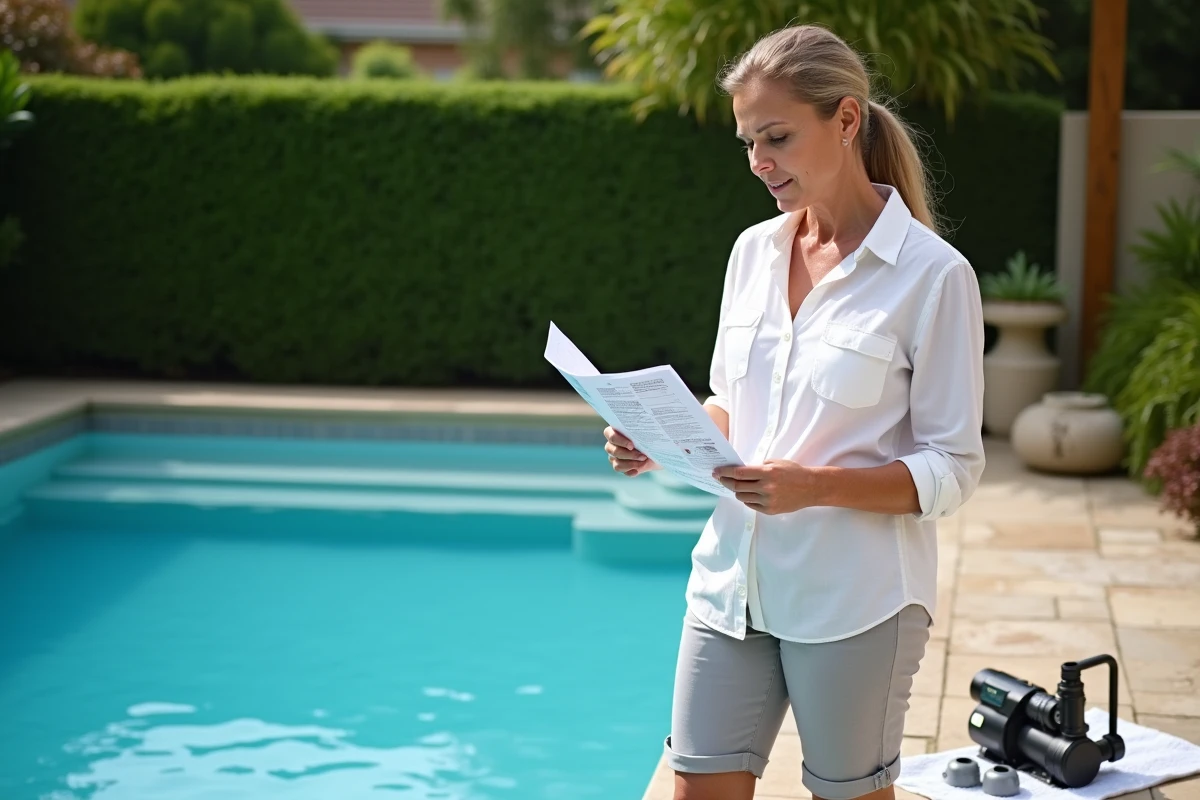
When the filter cartridge is absent: emergency measures
Sometimes the cartridge is out of order, and replacement takes a few days. Why not anticipate this situation? Here’s what can help limit the damage in the meantime.
- Maintain the chemical treatment (chlorine, bromine, or active oxygen) at an appropriate level. Without mechanical filtration, it is the only barrier against bacterial growth.
- Cover the pool with a tarp when it is not in use. Less organic matter enters the water, reducing the need for filtration.
- Manually skim and vacuum at least once a day. This surface cleaning partially compensates for the absence of a filter.
- Avoid running the pump continuously without a cartridge. Short sessions are sufficient to circulate the chemical treatment without exposing the turbine to prolonged operation outside normal conditions.
Keeping a spare cartridge in stock remains the best precaution. Compatible models for above-ground pool pumps are inexpensive and easily found.
Pool filtration: the cartridge remains the central link in the system
The pump ensures the flow, the chemical treatment ensures disinfection, but it is the filter that physically removes impurities from the water. Removing the cartridge means removing the only element capable of capturing what the eye cannot see.
In an above-ground pool used occasionally, a few hours without a cartridge during a shock treatment or backwashing will not turn the pool into a swamp. However, no combination of churning and chemistry can sustainably replace mechanical filtration.
The simplest reflex is to never start a long pump cycle without checking that the cartridge is in place and in good condition. A tear in the filter fabric or a misaligned tank seal produces the same effect as a complete absence of a cartridge: the water passes without being filtered, and the pool becomes cloudy in a few days.