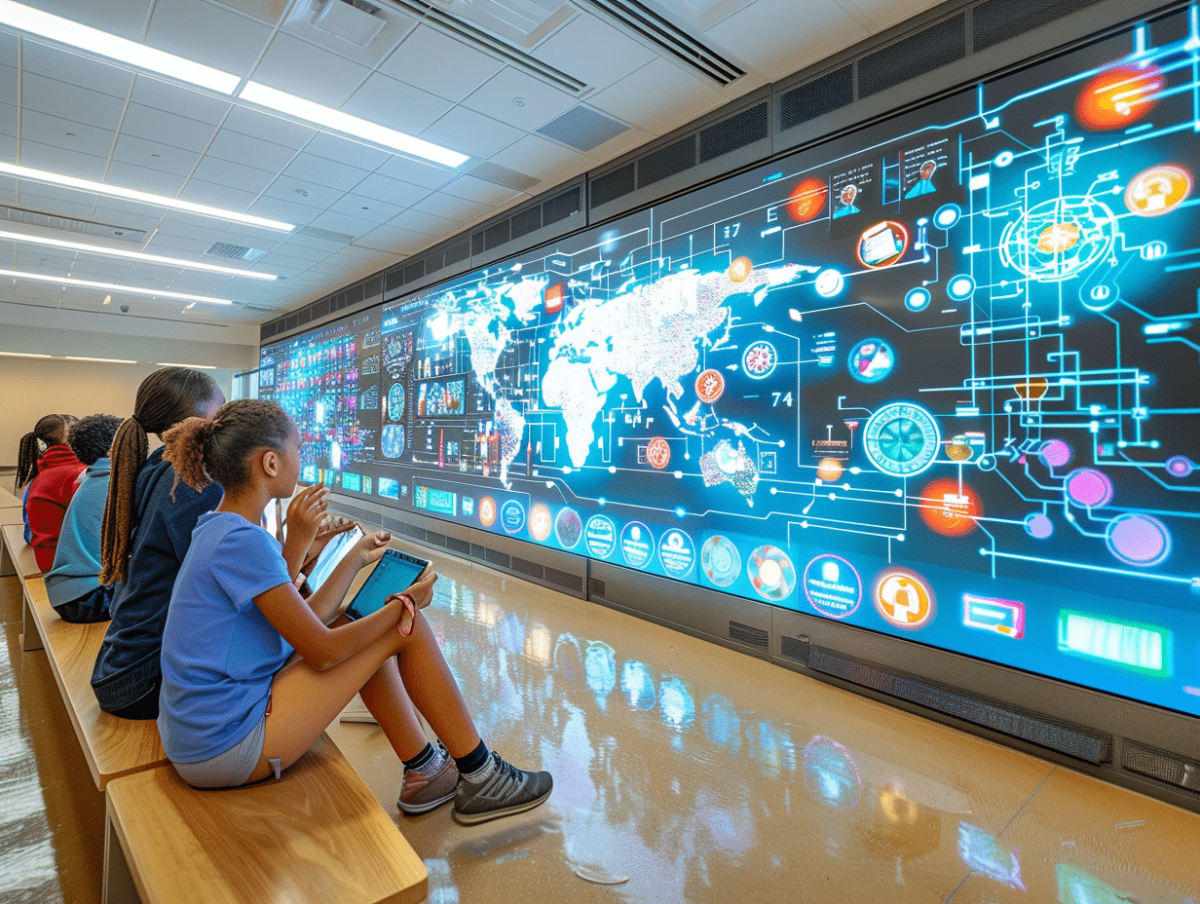
The rise of digital technology is disrupting traditional teaching methods and prompting educational institutions to rethink their pedagogical approaches. Online colleges are emerging as an innovative response to the growing demand for flexibility and accessibility in education. This trend, accelerated by the need to adapt to exceptional circumstances such as the Covid-19 pandemic, raises essential questions about the integration of digital platforms into the educational journey of adolescents. How do these tools influence students’ learning and socialization at this critical stage of their development? This complex issue concerns educators, parents, and policymakers alike.
Impact of Digital Platforms on Teaching Methods in Middle Schools
The integration of digital platforms in education is manifested by a significant transformation of pedagogical practices. At the heart of this shift are the digital workspaces (ENT), such as my digital desk college, which offer an integrated set of digital services, facilitating access to a multitude of educational resources for the educational community. These platforms enable teachers to diversify their teaching methods while providing students with a renewed, interactive, and collaborative learning environment.
Digital educational resources, like those provided by Éduthèque or the Educational Digital Resource Banks (BRNE), have proven to be assets for schools. They allow students to access rich and varied content, often freely available, that complements and enriches the school curriculum. Additionally, ETINCEL, a specialized platform, provides resources dedicated to technical and industrial education, reflecting the desire to adapt the digital offering to the specific needs of each discipline.
The use of digital tools in the school context, however, raises challenges, particularly in terms of equipment and the digital skills of education stakeholders. Teachers must be trained to effectively integrate these new resources into their pedagogy, while students need support to navigate this digital environment critically and responsibly. Parents, also involved, access these spaces, which encourages their participation in their children’s academic monitoring but also requires them to familiarize themselves with these new communication and work tools.

Challenges and Perspectives of Online Teaching for Traditional Education
The Future Investment Program (PIA2) acts as a catalyst for change in the French educational landscape. It supports schools in their digital transition, particularly by equipping schools and colleges with appropriate digital materials. This financial support proves crucial in reducing the digital divide and ensuring the widespread adoption of digital tools within traditional education.
Within this dynamic, the Digital Competency Reference Framework (CRCN) defines the skills that students must acquire. Pix, an innovative platform, plays a role in this system by assessing and certifying students’ digital skills, thus preparing the youth to master the tools and challenges of digital technology, which are essential in the information society.
In the face of the challenges of digital inclusion, the Édu-Up initiative provides fundamental support to students with special needs. It encourages the creation of innovative and accessible digital content, aiming to personalize learning and ensure educational success for all.
Local authorities also play a major role in realizing ambitious projects such as High School 4.0. This initiative aims to democratize access to digital technologies in high schools, thereby promoting systematic media and information education. It reflects a political will to evolve traditional education towards a harmonious integration of digital technology, responding to the demands of an era resolutely focused on innovation and connectivity.