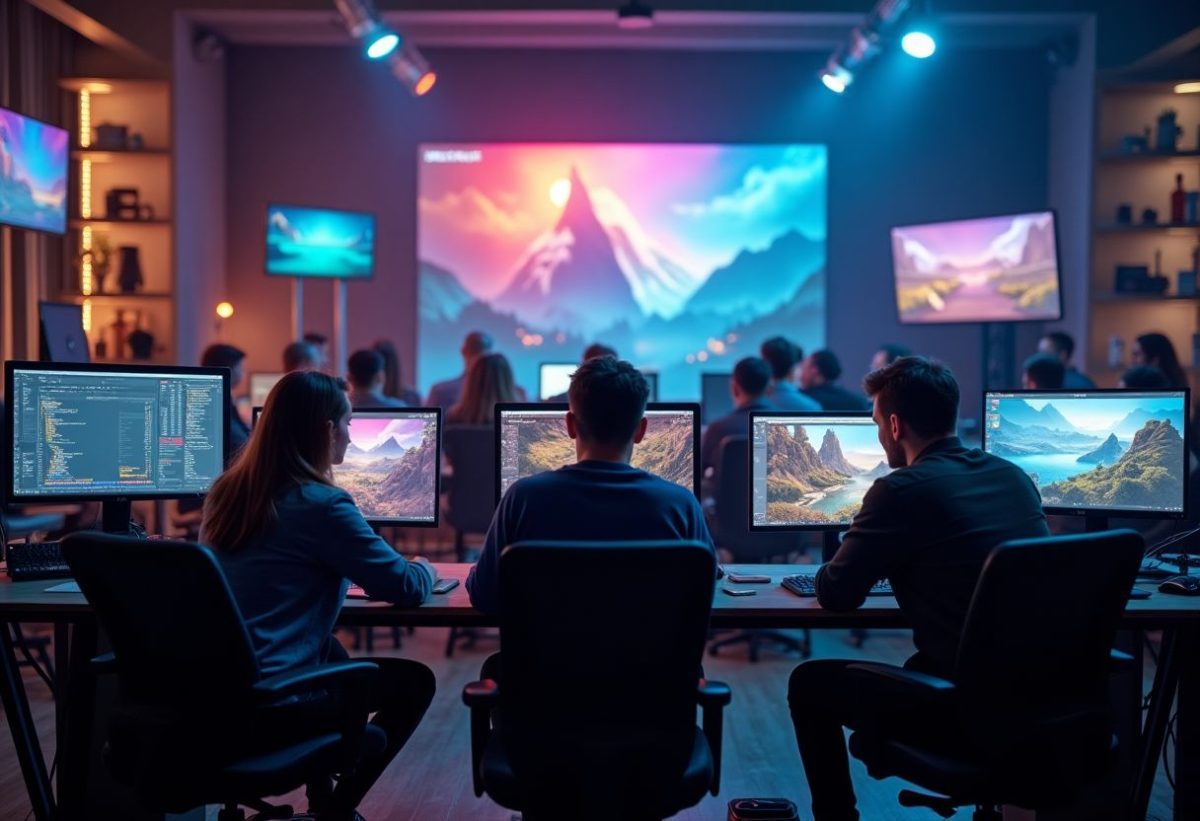
The video game sector, which is rapidly expanding, attracts a multitude of enthusiasts and professionals eager to get involved. With the exponential growth of this industry in France and around the world, training for careers in video games has become a promising career choice for many. Whether it’s about design, development, animation, or project management, training in video games is essential for anyone wanting to immerse themselves in this world of creativity and advanced technology.
Specialized schools are multiplying, offering various courses tailored to the many disciplines that make up this digital art.
The Different Aspects of Video Game Training
The diversity of video game professions reflects the richness and complexity of the training that accompanies it. Each specialization requires a set of specific skills, and students are often encouraged to explore several areas before specializing.
- Design and Game Design: Game design is the beating heart of any video game project. Designers create the mechanics, define the rules, and craft immersive experiences that captivate players.
- Development and Programming: Programmers translate designers’ ideas into digital reality. Mastering languages like C++, JavaScript, or Python is essential to bring a game to life.
- Graphics and Animation: Graphic designers and animators create the visuals and animations that will enchant players. Understanding 2D and 3D design, as well as using software like Blender or Adobe Creative Suite, is crucial.
- Project Management: Project managers oversee the game’s development from start to finish. They coordinate teams, manage deadlines and budgets, and ensure that the project meets expectations.
Specialized Schools and Programs
Video game schools have multiplied, each offering training tailored to market needs. These institutions provide various courses, ranging from a few months to several years.
- Specialized Schools: They offer a complete video game training, often oriented towards a practical and immersive approach. These institutions are directly linked to the industry and promote professional integration.
- Universities: Many universities now offer degrees in video games, with programs focused on theory and research. This curriculum provides an academic and in-depth approach to the subject.
- Online Training: For those who prefer flexible learning, online training offers a practical alternative. It allows students to take courses at their own pace while accessing quality educational resources.
Key Skills to Acquire
Success in the video game industry relies on acquiring specific skills and technical know-how. Students must develop both technical, artistic, and managerial skills.
To excel in development, mastery of programming tools and game engines is necessary. Skills in creativity and design enable the imagining of innovative and captivating game concepts.
The ability to work in a team, an essential skill in this field, is crucial for collaborating effectively within multidisciplinary teams.
Finally, skills in project management are indispensable for successfully completing complex projects within often tight deadlines.
Career Opportunities
Once training is completed, graduates can access a variety of positions within the video game industry. Opportunities extend beyond traditional game studios to other sectors.
The role of game designer is at the heart of game creation, while developers work on the source code to build the game’s architecture.
Graphic designers and animators are responsible for the visual aspects, making game worlds vibrant and interactive.
Other careers include game testing, community management to interact with players, and marketing to promote new titles.