
Classic leisure lists have recycled the same entries for years: cooking, reading, indoor sports, series. We observe that practices that generate real daily engagement share a common trait: they combine a format constraint (short time, limited space, minimal budget) with measurable progress. It is at this intersection that the most sustainable leisure ideas are found.
Hybrid immersive leisure: transforming your neighborhood into a playground
At-home escape games, connected neighborhood treasure hunts, and app-based scavenger hunts represent a rapidly expanding segment since 2022. We recommend distinguishing two formats based on the available time.
The first format, playable in under an hour, relies on geolocalized investigation scenarios that can be launched from your phone. No reservation, no minimum group size. You step out of your home, follow clues within a few streets, and solve. This type of activity turns a daily commute into a playful exploration of your local environment.
The second format occupies an entire evening. At-home escape game kits (physical boxes or printable files) offer puzzles to solve with family or friends, featuring a progressive difficulty level. To explore other options in this category, leisure activities on La Règle du Je cover a wide range of games and activities suitable for all profiles.
The key technical point to remember: immersion works when the framework imposes a time limit. Without a timer or narrative constraint, the activity loses its playful tension and falls back into the category of “strolling with a phone.”
Content creation as a daily hobby: beyond passive scrolling
Online content creation (video editing, amateur podcasts, writing on platforms) is now cited as a full-fledged hobby by an increasing share of 18-34 year-olds, with notable growth since 2022. Most articles on leisure still overlook this category or categorize it under “social media.”
We distinguish three levels of engagement, each corresponding to a different time investment:
- The micro-format (less than 15 minutes per session): daily thematic photography, commented stories, written sketches. The goal is not publication but the regularity of a short creative gesture.
- The intermediate format (30 to 60 minutes): editing a short video, recording a solo podcast episode, writing a blog post. This level requires a dedicated tool (editing software, quality microphone) and minimal editorial intent.
- The project format (several hours per week): amateur documentary series, thematic channel, newsletter. Here, the hobby aligns with a skill development logic: you learn framing, sound, narration.
The criterion for choice is not the result but the process. A sustainable creative hobby relies on the pleasure of making, not on the expectation of likes. We observe that those who persist over time are those who set a format constraint (a theme, a duration, a rhythm) rather than an audience goal.
Occasional volunteering: micro-engagement as a leisure activity
Structured short-term volunteering is developing through micro-engagement platforms that allow individuals to give one to three hours per week to an organization. Academic support, social visits, food parcel distribution, digital workshops: the formats are designed to fit into an urban professional’s schedule.
What differentiates this approach from traditional volunteering is the absence of an annual commitment. You choose a mission, complete it, and may not return. Occasional volunteering functions like à la carte leisure, without the mental burden of ongoing associative responsibility.
Practically, the most accessible missions require no prior skills. Sorting clothes, accompanying an outing, manning a booth at a local event. Technical missions (digital workshops, administrative support) suit those looking to mobilize professional expertise in a different context.
Structured intergenerational activities: organizing rather than enduring family time
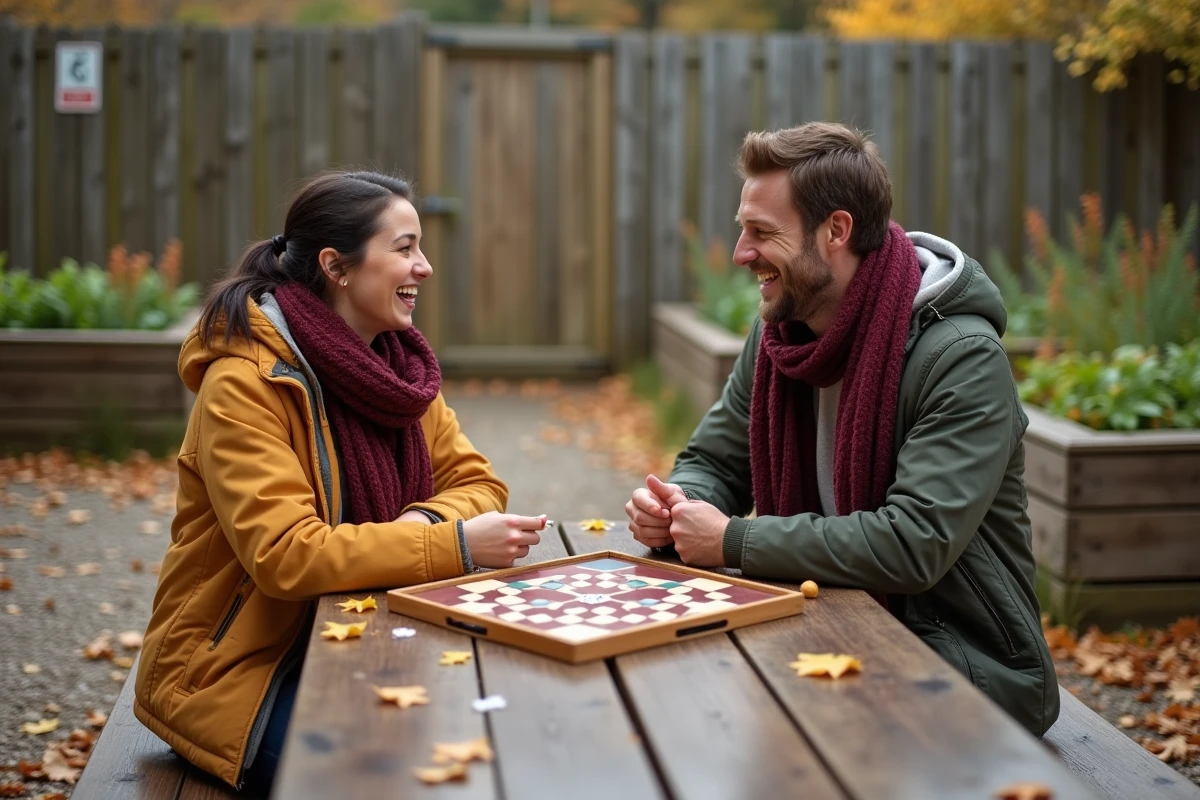
Intergenerational leisure does not just mean “playing with children.” We observe a rise in structured formats that give each participant an active role, regardless of age.
A concrete example: themed cooking workshops with task distribution by skill level. A six-year-old washes and measures, a teenager manages the cooking, an adult supervises the seasoning. The result is collective, and each contribution is identifiable. This principle of shared responsibility transforms a mundane activity into a moment of real cooperation.
Another underutilized format: family investigation games, cousins of escape games but designed for mixed-age groups. The puzzles combine logic (for older participants), visual observation (for younger ones), and physical manipulation (for everyone). The key lies in the design of the scenario, which must make each player essential to the progression.
Criteria for choosing a viable intergenerational activity
- Duration limited to 45-90 minutes: beyond this, younger participants’ concentration drops and frustration rises
- Tangible result at the end (cooked dish, solved puzzle, crafted object): shared satisfaction cements the desire to repeat
- No participant should be a spectator: if someone watches while others do, the format is poorly calibrated
A successful intergenerational leisure activity produces a shared memory, not just time spent together. The difference lies in the structure of the activity, not its nature.
Leisure ideas that last in daily life all share a mechanism: a clear constraint, a format suited to the available time, and a perceptible result at each session. Whether discussing immersive games, content creation, or occasional volunteering, it is this framework that distinguishes a regularly practiced activity from a desire abandoned after two attempts.