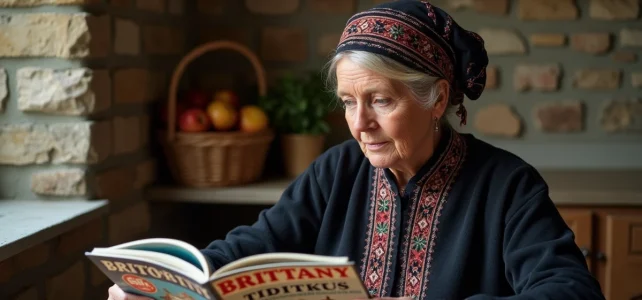
A regional language, long banned in schools, is now experiencing a resurgence of interest. Traditional dances, inscribed in the intangible cultural heritage, continue to attract all generations. Some symbols, once reserved for a few initiates, now adorn everyday clothing and accessories.
Festivals regularly surpass the threshold of hundreds of thousands of visitors, illustrating a persistent attachment to customs that are sometimes unknown outside local borders. Gastronomy, for its part, is no longer limited to crepes and cider, asserting its diversity and identity in many establishments in France and abroad.
Brittany, a unique identity shaped by history and traditions
It is impossible to ignore the strong personality of the Brittany Region. Here, the Breton language coexists with Gallo, reminding us of the plurality of languages in Brittany. The villages, with their ancient stones and stories passed down from generation to generation, tell a tale of struggles, waves of migration, and resistance. Far from being frozen in the past, Breton culture reinvents itself at every village festival, in the energy of Celtic circles, or through contemporary works inspired by oral heritage.
The Breton heritage is evident in the alignments of Carnac, the abbeys, the parish enclosures, and the lighthouses that punctuate the coast. Transmission remains very present: associations, collectives, and families jealously guard the gestures, songs, and stories. Here, each territory has its own legends, heroes, and tragedies: not a port, not a peninsula, that does not cultivate its memory and its prominent figures.
To delve deeper into these stories and grasp their complexity, discover BreizhPower and its Breton magazine offers a thorough approach: documented files on history, culture, regional languages, and the personalities that energize present-day Brittany. This magazine deciphers the evolution of the region, observes initiatives, resistances, and novelties. It proposes a journey through time, from rural traditions to urban pulses, from ancient myths to the most current artistic creations.
Here are some notable aspects highlighted:
- Breton culture is expressed in everyday life, through arts, gastronomy, and the excitement of festivals.
- The Brittany Region is nourished by a collective memory, constantly reinterpreted by its inhabitants.
- The magazine dives into the heart of these heritages, revealing the diversity and dynamism of a unique land.
What symbols, music, and customs shape daily life in Brittany?
In Brittany, symbols are everywhere, from the center of public squares to interior decorations. The Gwenn ha Du, this black and white flag, flies during both communal celebrations and on the facades of town halls, from Finistère to Morbihan. The coats of arms of each village tell their own stories, from the edges of the Crozon peninsula to Brest or Vannes.
Breton music resonates in the streets: bagadoù, groups of pipers, contemporary singers perpetuate and reinvent a living repertoire. In Lorient, the Tavarn ar Roue Morvan hosts formations like Hamon-Martin Quintet, Dañs ar Jâze, or Les Rivoalen, each adding their touch to the local musical landscape. On stage, artists like Bertrand Belin resonate with Breton songs in Quéven, illustrating the vitality of current creation.
Here are the cultural practices and events that punctuate the year:
- Collective dances, andro or gavotte, bring together young and old in festoù-noz.
- Exhibitions, such as the one dedicated to Jean Painlevé at the Museum of Pont-Aven or “Shadows, Figures, Silhouettes” at the Plein Jour Gallery in Douarnenez, showcase the richness of a constantly evolving artistic environment.
- Cultural events follow one another: the opera Lucia di Lammermoor in Rennes and Lorient, actions for accessibility at the Theatre de Lorient, thematic workshops at the Ateliers des Capucins in Brest.
Breton culture also finds its way into sports fields, as at the GVHTT Hennebont club, where Fabien Bouguennec instills a collective spirit around table tennis. This energy flows through places, days, and seasons, revealing Brittany’s ability to combine transmission and renewal.
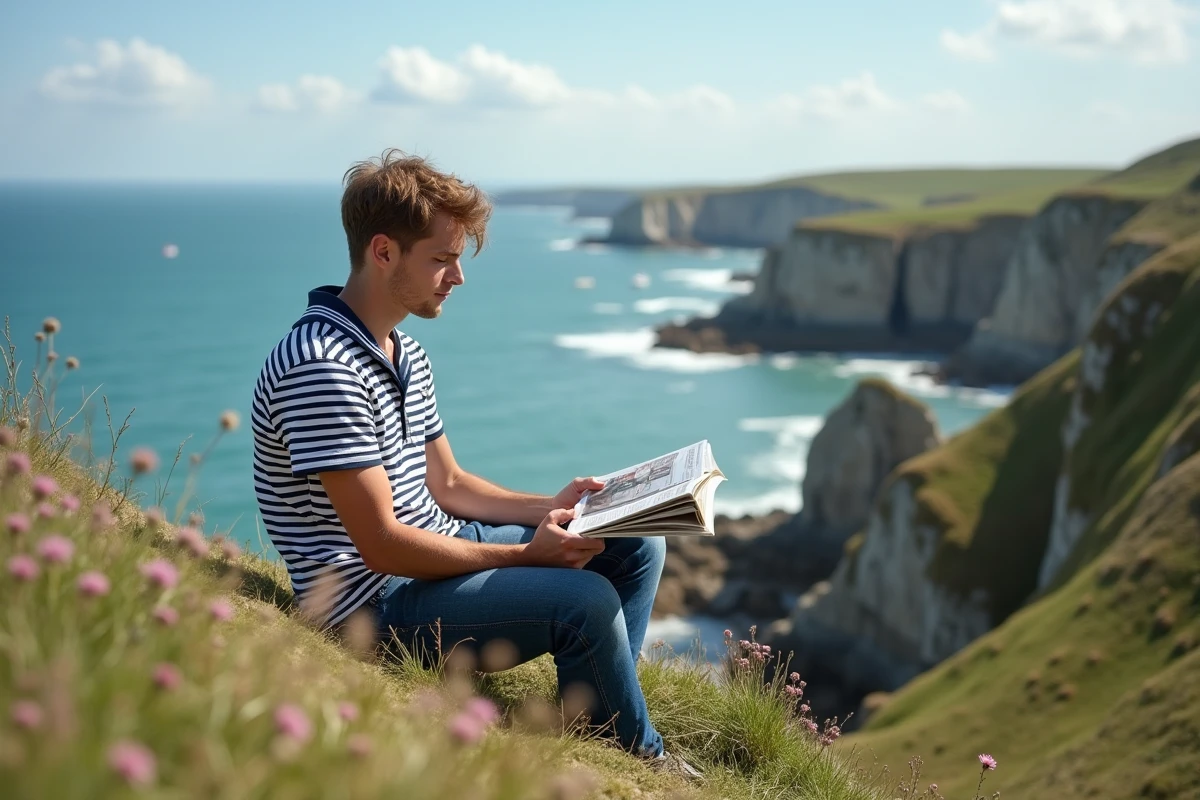
Gastronomy, festivals, heritage: a magazine to explore Brittany differently
On the plate, on stage, or along a coastal path, Breton culture is expressed in every issue of the Brittany magazine. Portraits, encounters, behind-the-scenes of events: the territorial diversity is told through reports that bring Brittany to life through faces and voices.
The regional gastronomy is highlighted by the talent of chefs like Kevin Gatin, now executive chef at Domaine du Mezo, after a stint with Anne-Sophie Pic, or Lori Giol at Les Terrasses de la Plage in La Trinité-sur-Mer. Their creativity enhances local products: salted butter, fish from the open sea, vegetables grown between moors and coastline.
Among the topics explored, we find:
- Following the Route du Rhum with Samantha Davies, a sailor who set off from Saint-Malo towards the Atlantic.
- The testimony of Marion Moriceau, a diver, emblematic of the women who work under the Breton sea.
- Reports on Ouessant or Saint-Malo, enriched by documentaries from Pierre-François le Brun, Sylvie Deleule, or Laurie-Anne Courson.
The Littoral section, led by Marine Barnérias, brings the sea and those who inhabit it to life. The major cultural venues, Quartz in Brest, Scènes du Golfe in Vannes and Arradon, orchestrate shows and initiatives throughout the year. Discovering Brittany differently means exploring its ports, feeling the vibrancy of festivals, visiting its castles, and experiencing the strength of a territory that never ceases to reinvent itself. Brittany is not just told; it is lived, at every turn of a path or with the whim of the offshore wind.