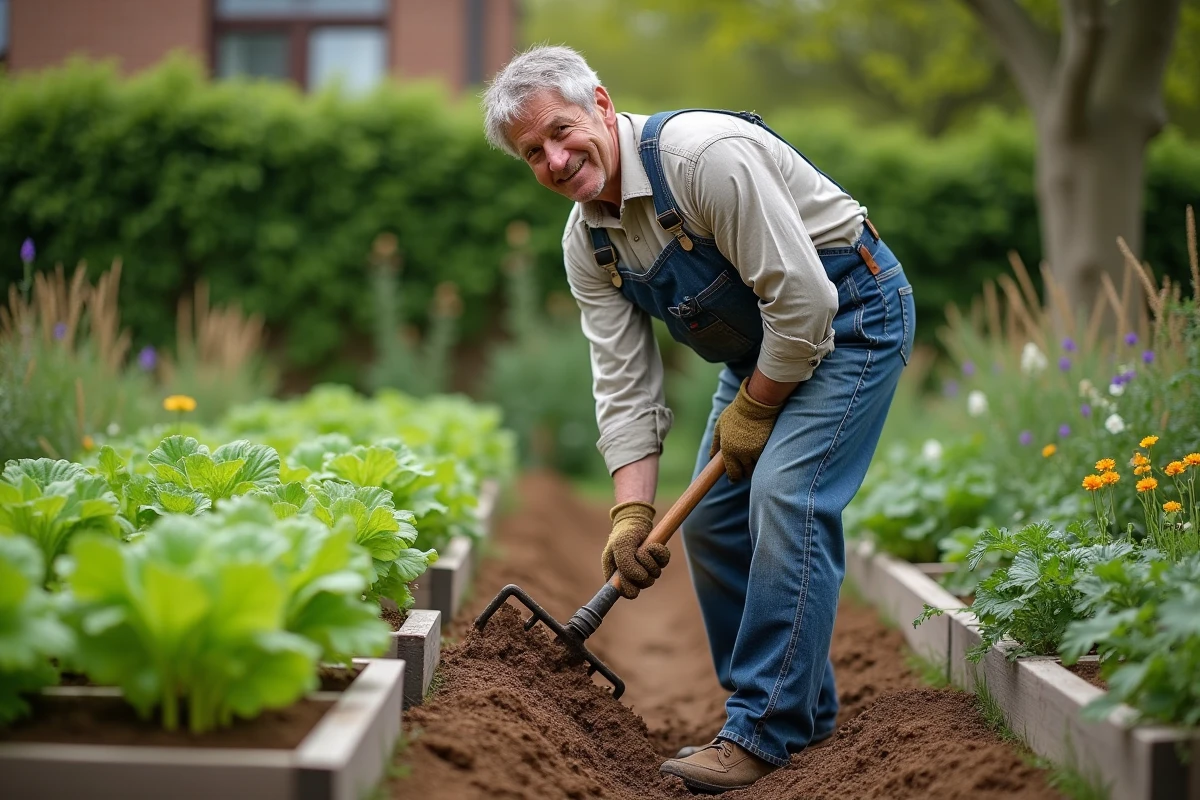
The grelinette does not plow; it lifts. This technical difference profoundly alters the way to prepare the soil and calls into question the systematic use of the spade or tiller. The absence of turning over the fertile layers is among the main reasons for its adoption by many discerning gardeners.
At first glance, grelinette models look similar. However, each manufacturer offers its own recipe: four, five, sometimes six tines, a subtle interplay of materials, working width, and ergonomics. These differences, far from being trivial, redefine the boundary between a high-performing tool and a chore companion. Classic guides often overlook these nuances, while in the field, they make all the difference.
Why the grelinette is becoming the essential ally of ecological gardening
The grelinette, created in the 1950s by André Grelin in France, symbolizes a return to agricultural methods that care for soil life. Unlike the spade, it does not disrupt the earth. Its principle: to loosen and aerate without disturbing the horizons, which protects the microfauna and the structure. This gesture, simple yet thoughtful, has become the spearhead of organic gardening and permaculture because here, living soil is not an abstract concept but a real priority.
If this tool is appealing, it is primarily due to its visible results: biodiversity remains intact, fertility improves, and physical effort is reduced. Intensive market gardeners have integrated it into their routine: it protects the back, allows working without bending over, and enables precision and efficiency. Preparing the soil before sowing, laying mulch or planting young shoots, maintaining rows, harvesting carrots or potatoes: the grelinette is involved at every stage, as long as one seeks a living soil.
But beyond the technique, this tool becomes a symbol of a rejection of all-mechanical methods and a desire to preserve resources. The example of the Grelinette Warrior, often highlighted in the Sculpte Haie comparative guide: comparative guide to choosing the best battery-powered hedge trimmer, embodies the search for balance: efficiency, simplicity, and respect for life with every stroke of the handle.
How to master the art of the grelinette for a living and productive soil
It all starts with choosing a true grelinette: hardened steel tines, ash wood handles, a careful balance between strength, ergonomics, and efficiency. There are variations, from three to nine tines, with or without a frame. Every detail matters: the shape of the tines, their number, the spacing, influence penetration into the soil and user comfort. Adapting your tool to the nature of the terrain and your own strength is already winning the first round.
The gesture itself is learned quickly. Insert the tines vertically, then tilt both handles towards you. This lever movement, accessible to all, allows loosening the soil without turning it over, leaving the precious microfauna undisturbed. The well-thought-out ergonomics of the handle ensure standing work, straight back, and distributed effort: fatigue fades, and the gardener’s health benefits.
Main uses of the grelinette
Here are the situations where the grelinette reveals all its potential:
- Preparation before sowing, mulching, or adding compost
- Selective weeding, extracting weeds without exhausting the soil
- Harvesting root vegetables such as potatoes and carrots
Mastering this tool means entering a global logic: protecting soil life, enhancing fertility, encouraging biodiversity. With each season, with each crop, one adapts their technique. The grelinette then becomes the tool for no-till cultivation, maintaining soil vitality while staying true to the spirit of sustainable gardening.

Comparison of the best grelinette models: reviews, advice, and choices suited to every gardener
On the ground, choosing a grelinette is not trivial. The type of soil, frequency of use, and the morphology of the user: each criterion guides towards a specific model. Three, five, sometimes seven tines? Straight, curved, or beveled tines? Heavy and clayey soils require robust tools, often with five thick tines, capable of penetrating without bending. Light or sandy soils, on the other hand, are better suited to three or four-tine versions, more manageable and gentle on the soil structure.
Some details change everything: the presence of a frame offers additional support for tilting, and interchangeable hardened steel tines promise a longer lifespan. Lovers of fine craftsmanship seek robustness, grip, and the nobility of ash wood. The market has expanded: French production, industrial or imported models, everyone can find a grelinette that aligns with their beliefs and budget. Artisan versions are more expensive, but ergonomics and longevity often make the difference.
The diversity of grelinettes allows for all needs: five tines for universal use, three tines for narrow beds or compact terrains, seven tines for large market gardening areas. Prices vary significantly based on origin, number of tines, and materials used. Having entered the public domain after patent FR1378114 and distinguished at the 1956 Lépine competition, the grelinette continues to adapt to each generation of gardeners, from the Sunday enthusiast to the demanding professional. The soil, for its part, has never stopped thanking them.