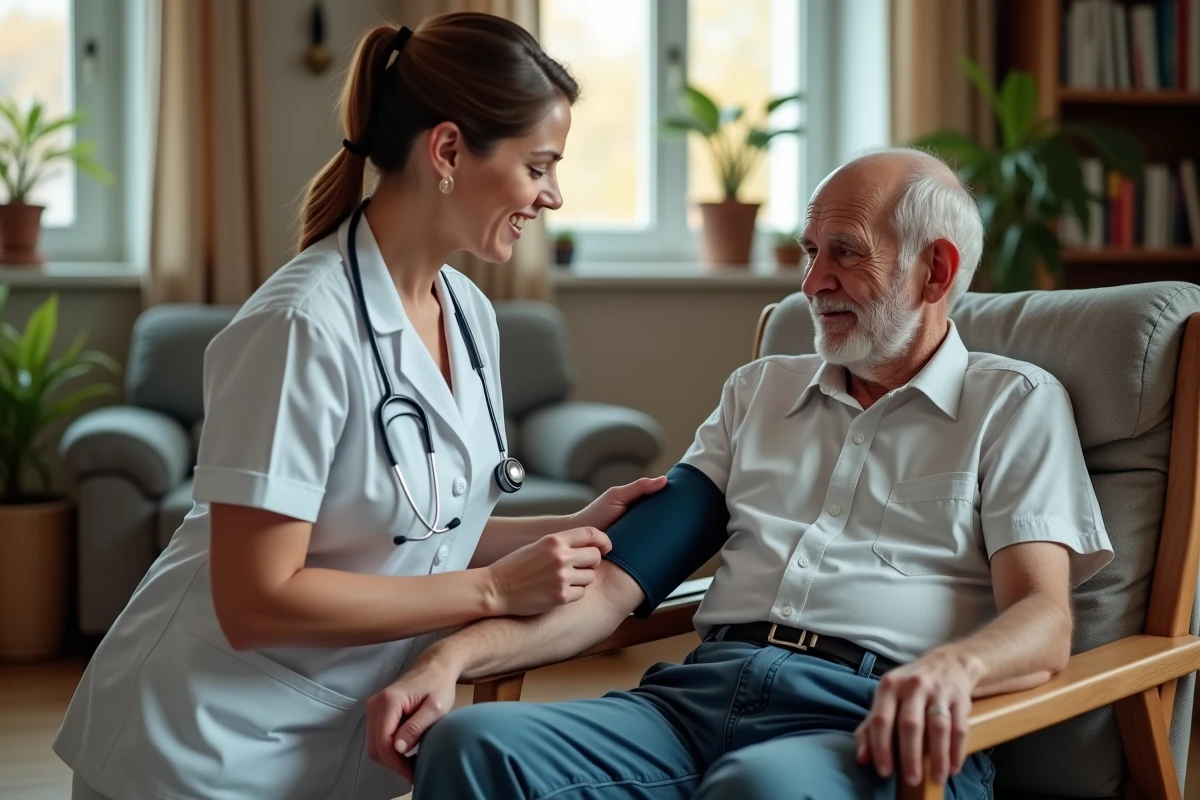
The liberal nursing practice occupies a special place in the landscape of home care in France. Unlike the intervention of an isolated professional, the practice brings together several nurses who coordinate to ensure continuity of care. This collective organization changes the very nature of the follow-up offered to the patient, with concrete implications for the quality of care, responsiveness, and prevention of complications.
Nursing telecare and remote follow-up: what the practice makes possible
Since the decree of June 3, 2021, and amendment 9 to the nursing convention (supplemented by updates in 2022-2023), nursing practices can integrate telecare actions into their routine practice. Therapeutic education, symptom monitoring, wound follow-up: these remote actions do not replace physical visits, but they allow for a responsiveness that a mere visit to the home does not guarantee.
A structured practice has secure communication tools with hospitals and treating physicians. A patient who reports an anomaly between two visits can receive a clinical response without waiting for the next scheduled visit. As detailed by the Construire la Bretagne website, this capacity for coordination distinguishes the practice from care provided by isolated professionals.
However, not all practices are equipped in the same way. Telecare requires an investment in compatible software and training. Field reports vary on this point: some rural practices struggle to deploy these tools due to lack of resources or sufficient network coverage.
Prevention of readmissions: the role of the liberal nursing practice
Regional health agencies (ARS) and the High Authority of Health (HAS) have placed the prevention of unplanned readmissions at the center of their recommendations since 2023-2024. The dedicated national program targets patients discharged from hospitalization, often with multiple health issues, for whom fragmented follow-up increases the risk of returning to the emergency room.
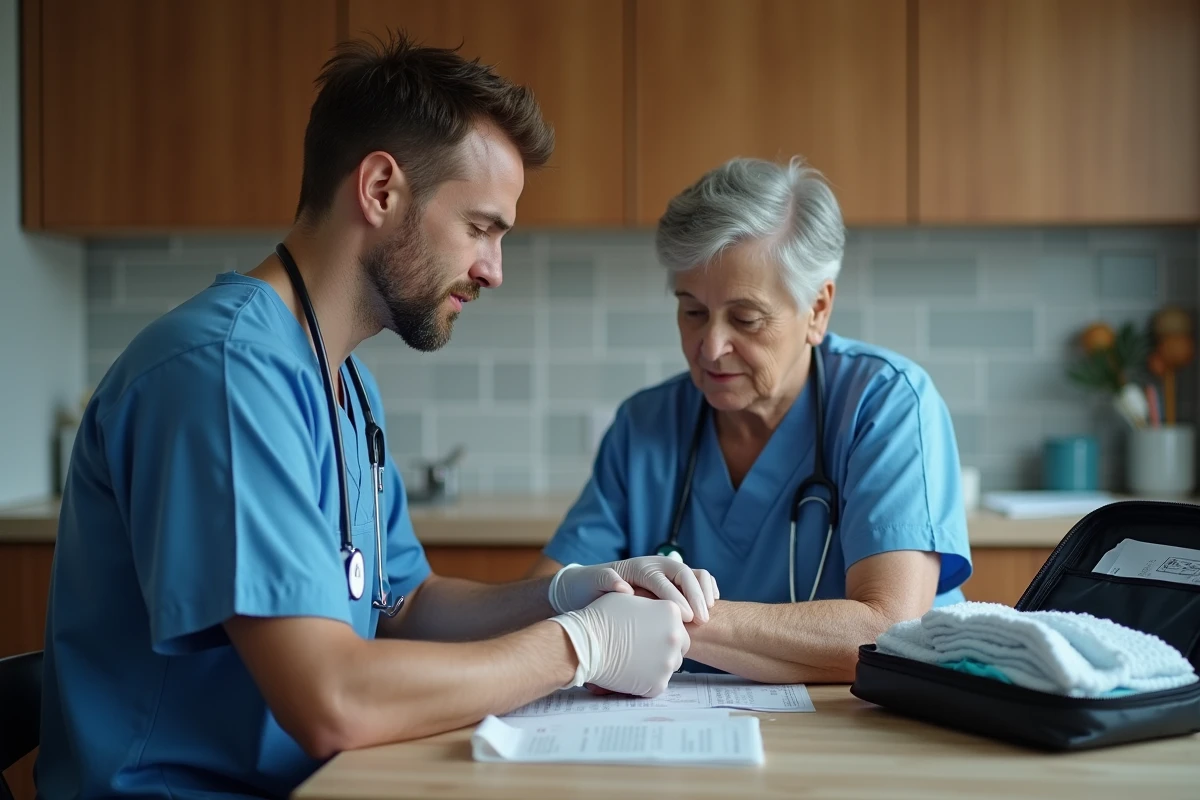
The structured nursing practice meets this requirement through its ability to organize regular communications with the hospital team. When a patient returns home after surgery, the practice ensures monitoring of vital signs, management of dressings, and control of medication adherence within a coordinated framework.
What coordination concretely changes
An isolated nurse who notices a deterioration must contact the treating physician or emergency services alone. In a practice, information flows between colleagues: if the morning nurse spots a warning sign, the evening nurse can adjust their visit accordingly. This continuity of communication reduces gaps in follow-up that often precede an avoidable readmission.
Reports from the DREES published between 2022 and 2024 indicate that patients followed by a practice team report a better sense of security and a better understanding of their treatments compared to those receiving isolated, sporadic interventions.
Complex home care: when the practice makes a difference
Since the Covid crisis, the use of liberal nursing practices for complex home care has significantly increased. Patients on infusion, insulin therapy requiring frequent adjustments, post-HAD (hospitalization at home) follow-up: these situations require an organization that the professional alone cannot always guarantee.
The practice offers a wider time frame thanks to the distribution of visits among several nurses. A diabetic patient requiring three daily visits will be cared for by professionals who share their file and know their history, rather than by different substitutes each day.
- Technical care (complex dressings, infusions, blood samples) provided by professionals who alternate on the same protocol
- Nursing and hygiene care coordinated with nursing assistants or home help services (SAAD, SPASAD)
- Shared clinical monitoring among practice members, with traceability of observations in a common file
Advanced practice nurse and liberal practice: an ongoing evolution
The framework for advanced practice nurses (IPA) has been strengthened in recent years. These professionals, trained at a master’s level, can provide follow-up consultations for patients with stabilized chronic conditions, renew certain prescriptions, and adjust treatments within a defined scope.
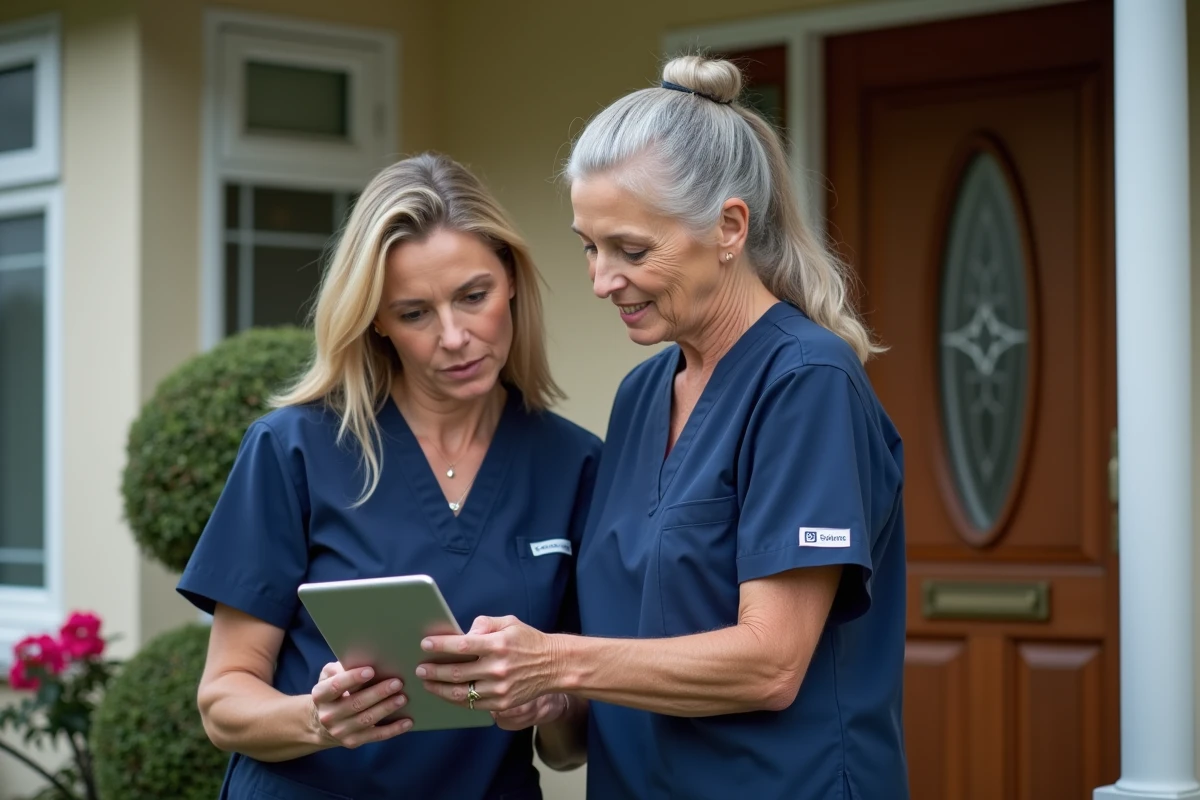
When an IPA works within a nursing practice, the complementarity with traditional state-registered nurses creates a network of skills. The chronic patient benefits from in-depth follow-up without multiplying external contacts.
Current limitations of the system
The available data does not yet allow for precise measurement of the impact of IPAs in liberal practices on the quality of home care. The number of IPAs working in liberal practice remains limited, and their geographical distribution is uneven. Rural areas and regions underserved by health professionals do not benefit in the same way as metropolitan areas.
Financial coverage by Health Insurance covers the majority of home nursing actions for contracted patients. In the case of a long-term condition (ALD), care related to the relevant pathology is fully reimbursed. The out-of-pocket expenses depend on the patient’s mutual insurance and the contracted status of the practice.
The choice of a nursing practice for home care is based on verifiable criteria: capacity for coordination with the hospital and the treating physician, time availability, telecare equipment, and possible presence of an IPA. These elements can be verified from the first contact by directly asking the concerned professionals.