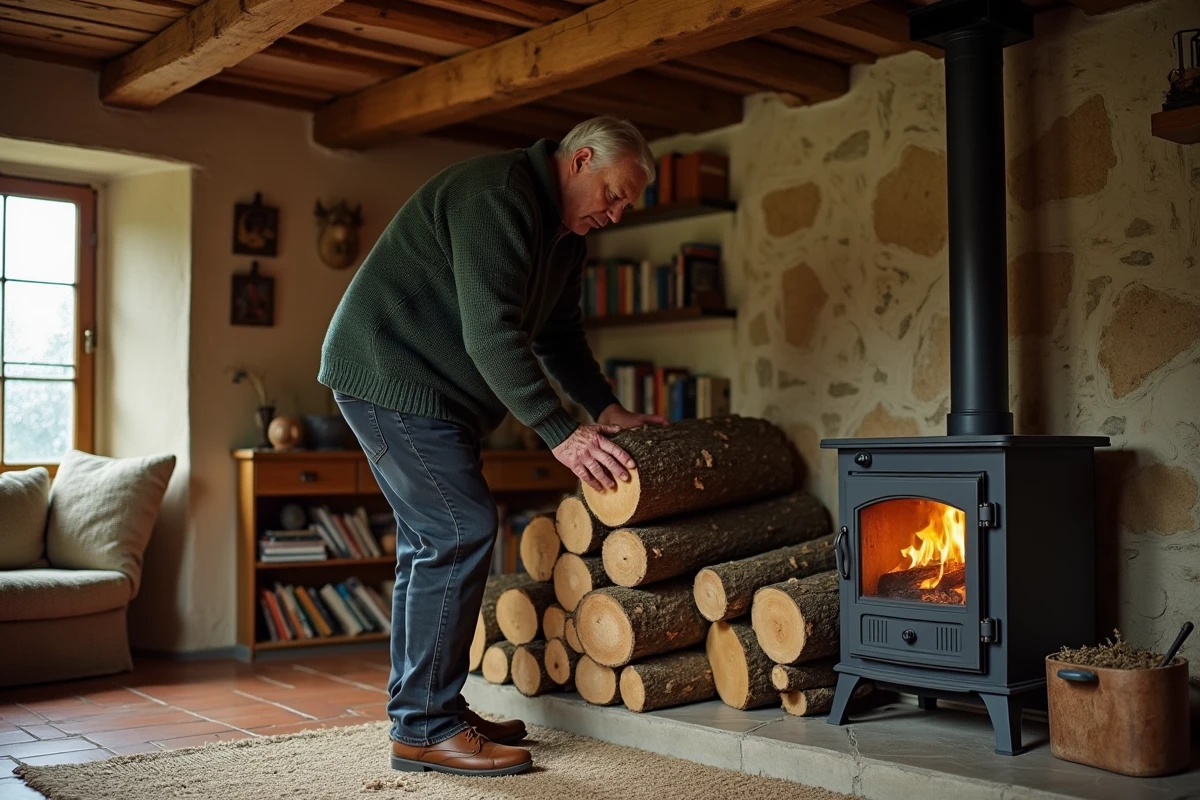
Wood heating represents the cheapest energy option on the French market, far ahead of gas and electricity. In Caen, where the proximity of the Normandy wood sector shortens supply chains, this option deserves a detailed analysis before any investment. What is the actual cost difference between the various energy sources, and above all, what technical parameters determine the profitability of a stove or insert in a Caen home?
Cost per kWh by energy: wood far ahead in Caen
The data published by ADEME in 2023 allows for a comparison of the price per kilowatt-hour of the main heating sources in France. This comparison directly informs the choices of Caen households.
| Energy | Price including tax per kWh (2023) |
|---|---|
| Wood logs | €0.044 |
| Bulk pellets | €0.094 |
| Gas | €0.123 |
| Electricity | €0.228 |
The gap between logs and electricity is massive: wood logs cost about five times less than electricity per kWh. Pellets, which are more expensive than logs, remain significantly below gas.
For a Caen household that primarily heats with wood, the annual fuel bill decreases significantly compared to an all-electric solution. This advantage is reinforced by the proximity of the resource: Normandy has a forest cover and a structured wood sector that limit transport costs.
Households considering wood heating in Caen should also consider mixed wood-pellet stoves, which allow switching from one fuel to another according to seasonal price fluctuations.
Efficiency of devices: why an open fireplace is an energy trap
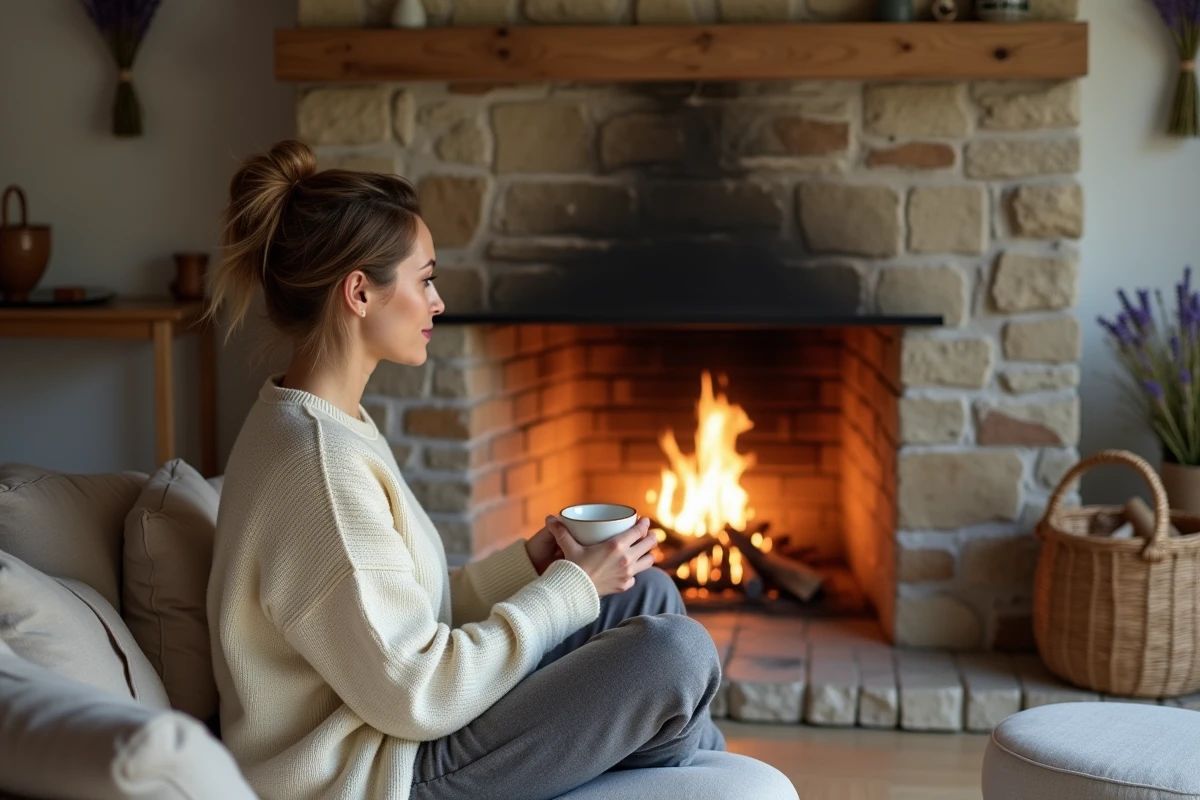
The type of device installed determines the amount of energy actually returned to the house. ADEME’s data on this point is unequivocal.
An open fireplace lets escape about 90% of the energy produced by combustion. Almost all the heat rises the flue without warming the room. The volume of wood burned is considerable for mediocre comfort.
In contrast, a recent pellet stove (post-2012) consumes about nine times less wood than an open fireplace for the same amount of heat. A recent log stove (post-2015) consumes about eight times less. These modern devices achieve efficiencies that transform the economic equation of wood heating.
Fine particle emissions: a decisive factor in Caen
Energy performance goes hand in hand with air quality. ADEME indicates that a recent pellet stove emits on average 260 times fewer fine particles than an open fireplace. For a recent log stove, the reduction factor reaches 25.
This point has direct regulatory implications. Normandy is covered by an Atmospheric Protection Plan (PPA) that may restrict the use of the most polluting devices during pollution peaks. Several French municipalities have already banned open fireplaces in this context. Open fireplaces are becoming a regulatory risk in the medium term for Caen homeowners who have not modernized their installations.
Local energy resilience: wood as a lever in Normandy
Beyond price, firewood plays a role in energy security that gas and electricity cannot offer in the same way. Recent reports from the Ministry of Energy Transition and ADEME on the biomass sector position wood energy as a tool for resilience against tensions on gas and electricity networks.
Regions with significant forest cover and a structured wood sector, which corresponds to Normandy’s profile according to data from IGN and DRAAF, are encouraged to develop local uses. This concretely means that wood supply in Caen is little dependent on international markets, unlike natural gas.
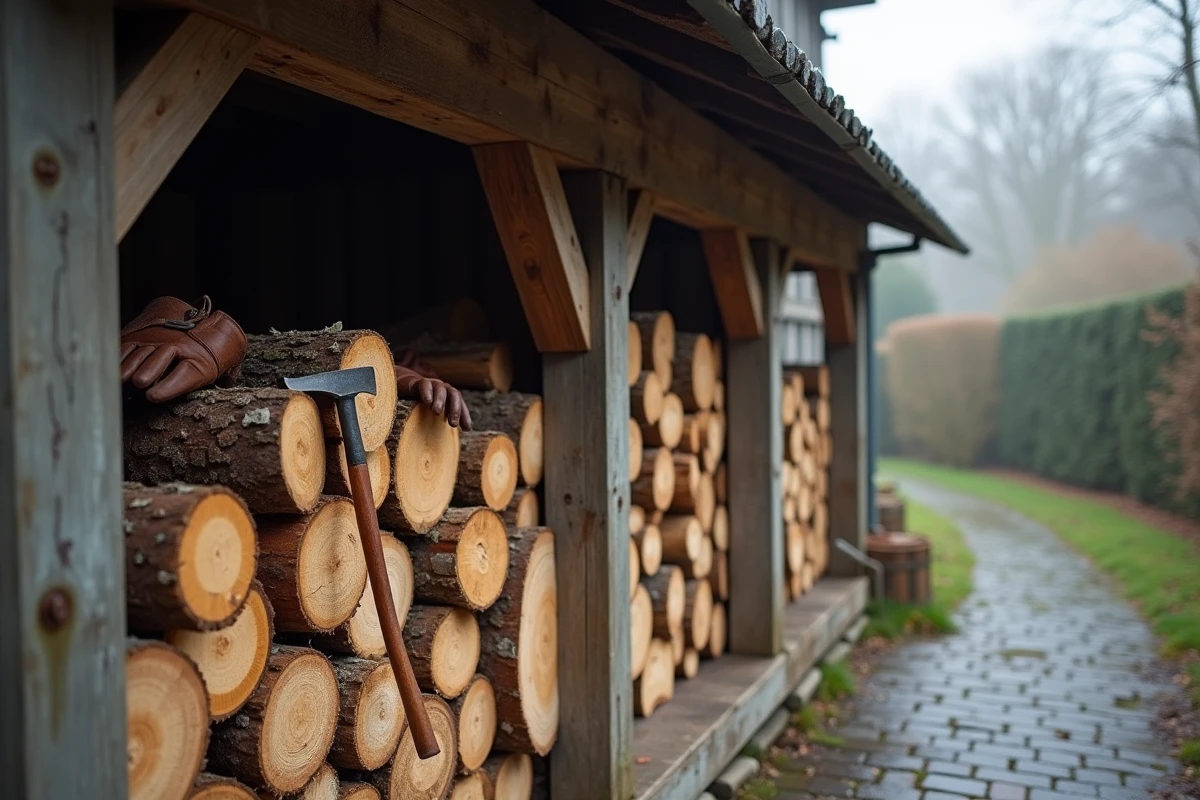
This short circuit dimension also presents an ecological interest. Wood energy is classified as renewable energy provided that the forest is managed sustainably, which the certifications of the Normandy sector allow to verify. In France, over 7.8 million households already use wood for heating.
Technical criteria for a high-performance installation in Caen
Not all wood devices are created equal. The choice depends on a few technical parameters that determine the actual efficiency in a Caen home.
- The sizing of the device relative to the volume to be heated: an oversized stove operates at low speed, degrading combustion and increasing pollutant emissions
- The level of insulation of the dwelling: in a poorly insulated house, even a high-performance device will struggle to maintain a consistent temperature, and wood consumption will skyrocket
- The quality of the fuel: insufficiently dry wood (too high moisture content) divides the calorific power and clogs the flue, which reduces the lifespan of the installation
- The choice between central heating and supplementary heating: an insert or a ductable stove can redistribute heat to several rooms, while a simple stove primarily heats the room where it is installed
Storing wood ahead of the heating season is part of the equation. Logs must dry for several months in a ventilated and sheltered place before use. Well-dried wood burns better, heats more, and pollutes less.
Financial aids: a refocusing on high-performance devices
Installation aid programs (notably MaPrimeRénov’) are gradually refocusing on the most efficient and least emitting equipment. The Flamme Verte label, which certifies devices based on their efficiency and emissions, is becoming an increasingly decisive criterion for accessing subsidies.
For a Caen homeowner, investing in a recently labeled stove or insert allows for combining the advantage of the cheapest fuel on the market with a purchase aid that reduces the initial cost. The return on investment directly depends on the efficiency of the chosen device and the quality of the existing insulation.
Wood heating in Caen combines one of the cheapest fuels on the market, a local supply chain, and devices whose efficiency has radically improved. The main variable remains the choice of equipment: a recent device, properly sized and supplied with dry wood, separates a profitable investment from a source of unnecessary expenses and pollution.