
One Wednesday evening, cupboard open, three children circling the table: we’ve all experienced that moment when you need to whip up a decent family meal without spending an hour or blowing the budget. The easy and delicious recipes that really work in everyday life are not those from lengthy slideshows, but those that take into account what we actually have on hand, from cooking time to gas costs.
Short cooking time and light bills: cooking with family without wasting energy
We often talk about the price of ingredients, but rarely about the cost of cooking. Since 2023, Ademe has advised prioritizing short cooking recipes, batch cooking in the oven, or using small appliances like electric pressure cookers to lighten the energy bill in the kitchen.
In practical terms, this changes how we choose our dishes. A potato gratin that stays in the oven for forty minutes does not cost the same as a stir-fried rice dish with vegetables that can be done in fifteen minutes on a single burner. Adapting the cooking method to the energy budget becomes a real criterion for selecting family recipes.
You can find ideas that combine this practical concern with the joy of cooking together on anospetitsfourneaux.fr, with recipes designed for everyday meals without hassle.
Some simple habits can help reduce consumption without sacrificing taste:
- Group two dishes in the oven (a gratin and a dessert, for example) to make the most of each heating cycle
- Prefer covered cooking on the stovetop, which reduces the time needed to reach temperature
- Use a pressure cooker for dried vegetables, soups, and stews: cooking time is halved and so is consumption
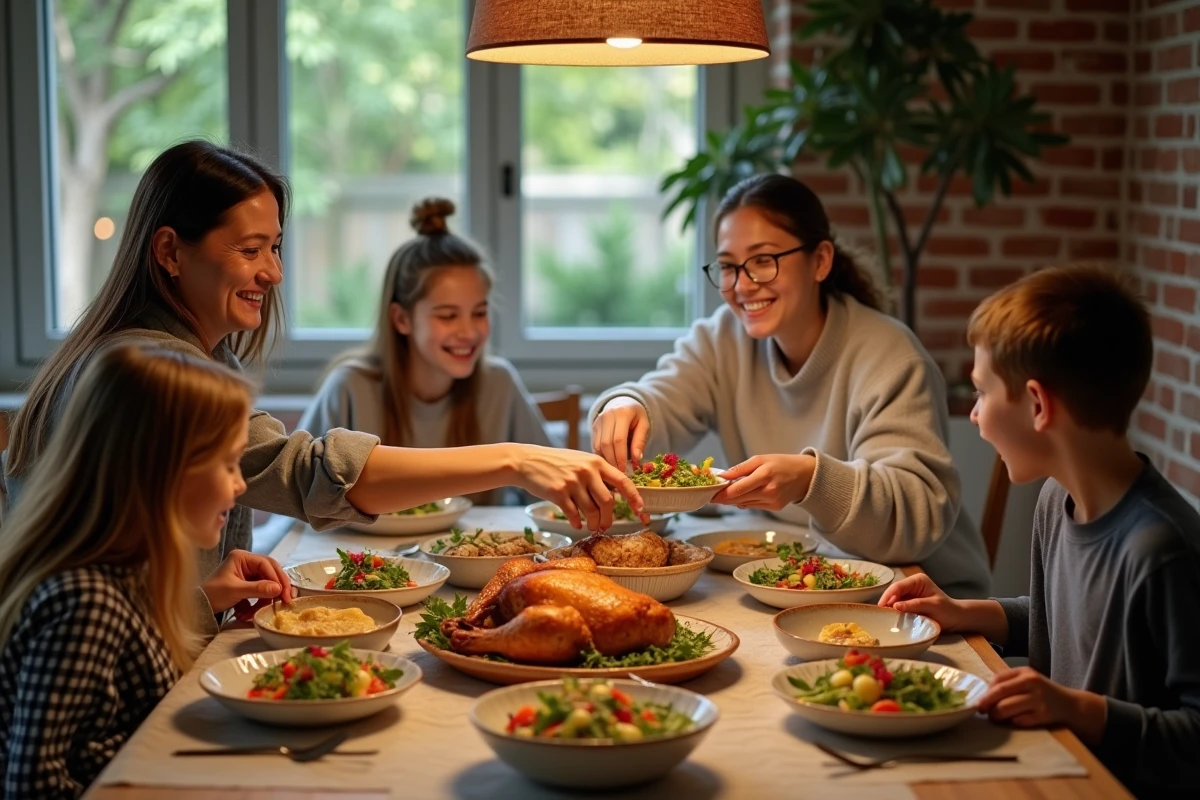
Involving children in meal preparation: a hands-on learning experience
Giving a peeler to a six-year-old to peel carrots is more than just a helping hand. Cooking with children turns mealtime into a learning moment: weighing flour, counting eggs, observing dough rising. We work on math, fine motor skills, and patience.
Anses highlighted in 2024 that the consumption of ultra-processed foods is particularly high among children. When a child participates in preparing a homemade dish, they understand what they are eating. They can tell the difference between grated cheese and an orange powder in a packet.
What tasks to assign based on age
No need for a complete Montessori protocol. We adapt based on what the child can do safely.
- From four years old: washing vegetables, mixing a salad, mashing cooked potatoes with a fork
- Around six to seven years old: cracking eggs, measuring quantities with a measuring cup, rolling out pie dough
- From nine years old: cutting soft vegetables with a suitable knife, monitoring stovetop cooking under supervision
- Teenagers can manage a complete dish from start to finish, provided they have been shown the basics beforehand
Responses vary on this point: some children love getting their hands in the dough right away, while others prefer to observe at first. We don’t force it; we offer it.
Budget-friendly family recipes: practical dishes for the week
Rice, potatoes, seasonal vegetables, and cheese remain the cornerstones of economical family cooking. What makes the difference is how they are combined to ensure the result isn’t monotonous.
Vegetable and cheese rice gratin
We cook the rice in advance (or use leftovers from the day before). We mix it with sautéed zucchini or leeks, add a beaten egg, grated cheese, salt, and pepper. Twenty minutes in the oven is enough if the rice is already cooked. The children can mix the ingredients and sprinkle the cheese on top.
Warm potato salad with mustard dressing
Cook in the pressure cooker for speed. We cut the still-warm potatoes, add a mustard vinaigrette, chopped pickles, and parsley. A complete dish with a can of tuna or a hard-boiled egg. The cost per person remains very low and preparation takes no more than twenty minutes.

Crustless seasonal vegetable quiche
Omitting the crust saves time and money. We grease a mold, pour in a mixture of eggs, cream, and diced vegetables (carrots, broccoli, onions). The melted cheese on top does the rest. The children can help with the mixing and choosing the vegetables.
Planning family meals to cook less often
Cooking two or three times a week in sufficient quantities to cover several dinners is the most effective strategy when you want to limit time spent in the kitchen without resorting to prepared meals. We prepare a large volume on Sundays and Wednesdays, dividing it into portions.
A stew in the pressure cooker on Sunday (a vegetable chili, for example) provides two meals. The rice cooked in large quantities serves as a base on Monday night for a stir-fry, and Tuesday for a gratin. The accompanying salad changes, but the base dish remains.
This approach also reduces the energy bill: fewer cooking cycles during the week, less preheating of the oven. We cook smart without thinking of it as a constraint.
The real benefit of this approach is peace of mind. Knowing what we will eat for the next five evenings eliminates the daily question that is as exhausting as the preparation itself. A notebook, a chart on the fridge, or a simple list on the phone is enough to organize the week. The children can even participate in choosing the recipes, which solves half of the negotiations at the table.